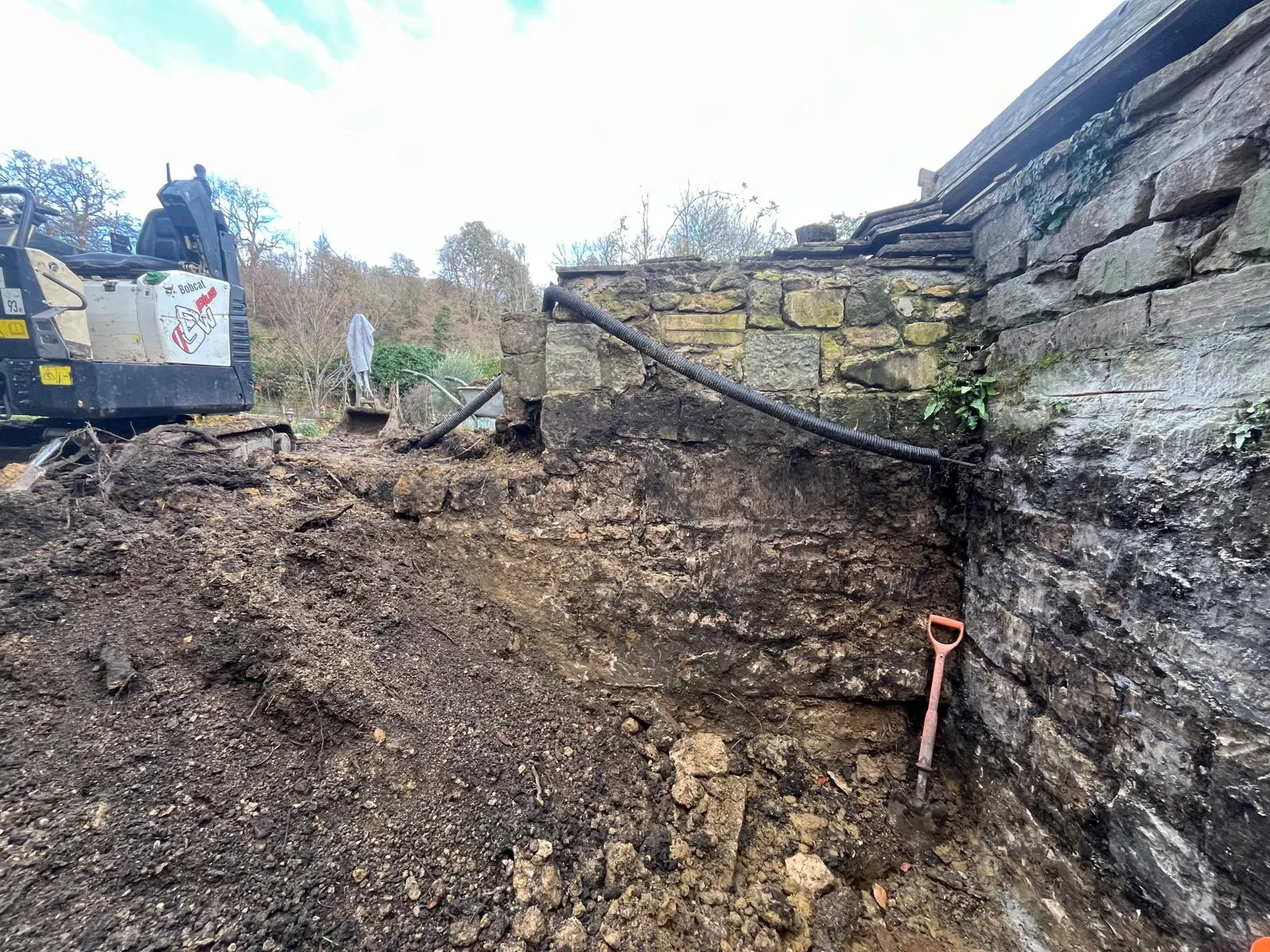
Most people decide to extend in spring. The garden comes back to life, the kitchen suddenly feels too small, and they start ringing round for quotes in April. By the time the drawings are done, planning has been decided and a builder has a free slot, it’s often late summer, and sometimes the following year.
The people who get a builder on site in spring started in winter. Almost nothing about an extension in its first few months involves building. It’s surveys, drawings, applications and waiting. All of that can happen while it’s cold and wet outside, so that when the weather turns, the digger can turn up.
This is the timeline we’d suggest if you want work starting in spring.
Why the Paperwork Takes Longer Than the Building
A single-storey rear extension in Bath typically takes 10 to 14 weeks on site. The part before that, from first idea to the first spade in the ground, often takes just as long. Sometimes longer.
That’s because several things have to happen, and some of them have fixed waiting periods you can’t hurry:
- Design and drawings: a measured survey, then drawings you’re happy with
- Planning permission or permitted development: depending on your house and where it is
- Building regulations: structural calculations and an approved set of drawings
- Party wall notices: if you’re building near or on a shared boundary
- A fixed quote and a start date: which needs the final drawings to price properly
In Bath there’s an extra layer. The whole city is a World Heritage Site and much of it sits in conservation areas, so applications here often take longer than the national average.
The Winter-to-Spring Timeline
November: get someone round to look
Start with a site visit. A good builder will look at access, the existing structure, the drains, ground levels and what your neighbours have done, and give you a realistic idea of what’s possible and roughly what it costs.
This is also when you find out whether you need full planning permission or can use permitted development rights. In Weston and Southdown, for example, many houses can extend under permitted development. In conservation areas like Lansdown, the rules are much tighter.
November to December: design and drawings
Get the measured survey done and the drawings drawn. This usually takes a few weeks. It’s worth taking your time here, because changing your mind once building has started is the single biggest cause of extensions running late and over budget.
If you’re thinking about a new kitchen as part of the extension, plan it now too. The kitchen layout decides where the drains, the steel, the windows and the sockets go, so it needs to be fixed before the building is. Our kitchen fitting team can work the layout into the extension drawings from the start.
December to January: submit planning
Once the drawings are done, the application goes in. Allow a few weeks for the council to validate it, then the 8-week target for a decision on a householder application. In conservation areas, it’s realistic to allow 10 to 16 weeks.
If your house is listed, you’ll also need listed building consent. That runs alongside planning, but the drawings and heritage statement need more care. Our heritage restoration work means we’re used to what Bath’s conservation officers expect.
January to February: building regs and party wall
While planning is being decided, the rest of the paperwork can run in parallel:
- Structural calculations and building regulations drawings. A full plans application usually takes around five weeks to approve.
- Party wall notices. If your extension involves a shared wall, or digging foundations within three metres of a neighbour’s, you need to serve notice: one month for excavations and work on an existing party wall, two months for a new wall on the boundary. Have a friendly conversation over the fence first. It makes the formal part much easier.
February to March: fixed quote and start date
With final drawings in hand, a builder can give you a proper fixed price instead of an estimate. Every extension we quote is fixed-price and itemised, so the number you sign is the number you pay. This is when you agree a start date. It’s also when long-lead items like windows, bifold doors and steel beams get ordered, because these often take four to six weeks to arrive.
Spring: start on site
Planning decided, building regs approved, party wall sorted, materials ordered. The ground is drier, the days are longer, and the build can go ahead without weeks lost to waterlogged foundations.
Why Not Just Build in Winter?
You can build parts of an extension in winter, but it’s slower and riskier. Concrete can’t be poured on frozen ground, foundations fill with water in heavy rain, and render and lime mortar can’t go on below about five degrees. A wet Bath winter can add two to four weeks to a build.
Internal work is different. Kitchen refits, bathrooms and loft conversions carry on happily through winter because they’re out of the weather. If you’re thinking about a loft conversion rather than an extension, winter is a perfectly good time to build one.
For an extension, winter is for planning and spring is for building.
Common Questions
Can you build an extension in winter?
Yes, but cold and wet weather slows groundworks, concrete and external finishes. Most homeowners are better off using winter for the paperwork and starting on site in spring.
How long does planning permission take in Bath?
The target for a householder application is 8 weeks from validation. In conservation areas, allow 10 to 16 weeks. If your extension falls under permitted development, you may not need full planning at all.
When should I book a builder for a spring start?
Ideally in the autumn or early winter. That gives time for design, planning and building regs, and means you can agree a start date before builders’ spring diaries fill up.
Do I need my neighbour’s permission to extend?
Not their permission, but you may need to serve party wall notice if you’re working on a shared wall or digging near their foundations. Talking to them early saves time.
Start Now, Build in Spring
If you’re thinking about an extension next year, now is the time to get someone round. We’ll look at the property, tell you honestly whether you need planning, give you a realistic timeline and a rough cost, and help you get the paperwork moving over the winter.
See our extension builders service for how we work and what it costs, or get in touch to book a free site visit.
