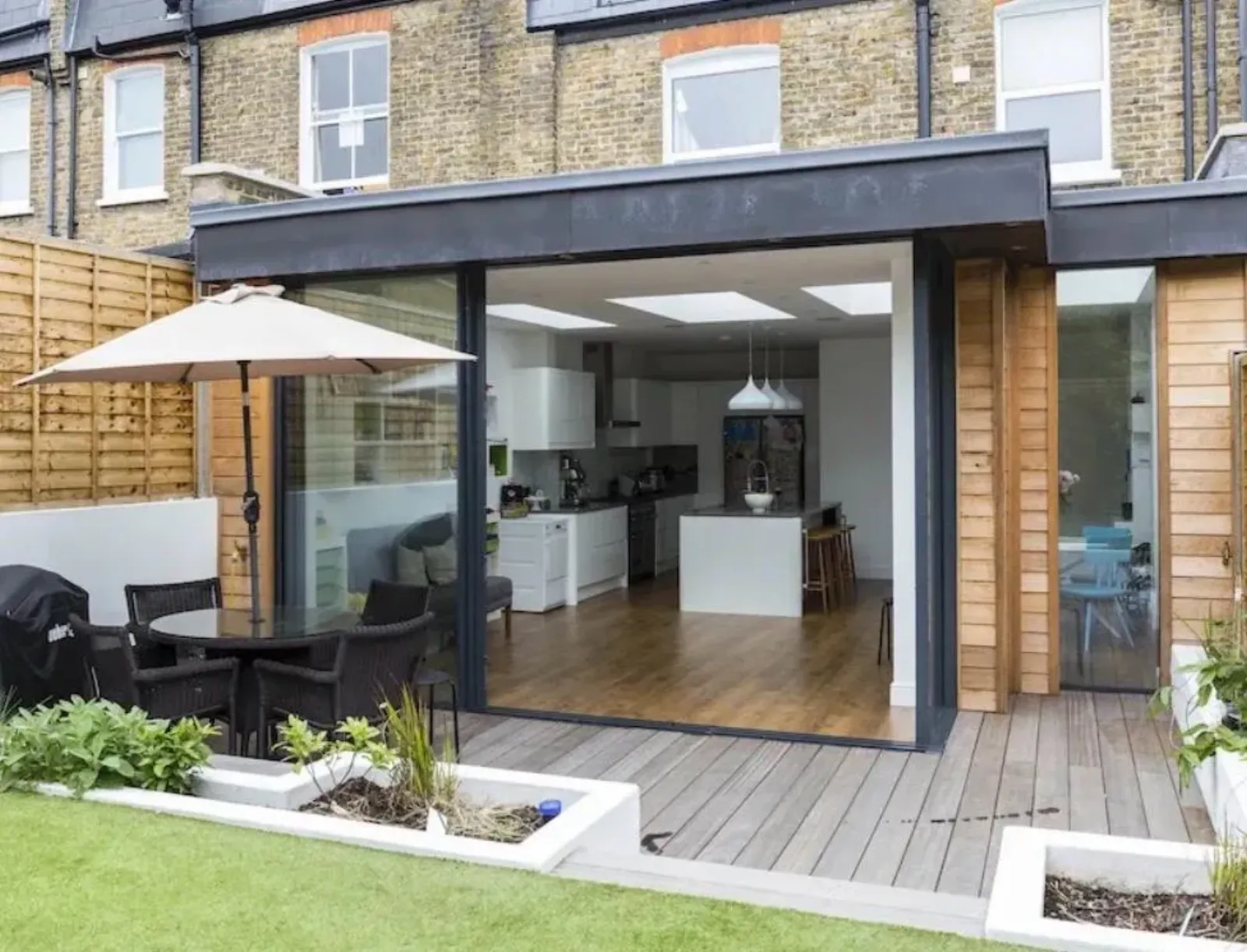
Planning permission is one of the most misunderstood parts of extending a home in Bath. Some projects need it; many don’t. And in Bath specifically, the rules are more layered than almost anywhere else in England — a combination of national permitted development rights, local conservation area controls, and the UNESCO World Heritage Site designation all interact to create a complex picture.
This guide cuts through the complexity and gives you a practical framework for understanding what your extension project is likely to need.
Permitted Development: When You Don’t Need Planning Permission
For many straightforward single-storey rear extensions in Bath, permitted development (PD) rights allow you to build without a planning application — subject to specific limits and conditions.
For a detached house, you can extend up to 8 metres from the original rear wall under the larger home extension scheme (requires prior approval notification). For terraced and semi-detached houses, the limit is 6 metres.
For a standard single-storey rear extension using the standard PD limits (without prior approval), a detached house can go 4 metres and a terrace or semi 3 metres.
Side extensions almost always require planning permission. Two-storey extensions always require planning permission.
Important: PD Rights Are Frequently Removed in Bath
This is where many homeowners come unstuck. Bath & North East Somerset Council has served Article 4 Directions across much of the city that remove permitted development rights. If your property sits within a conservation area — and much of Bath does — your PD rights are significantly restricted.
You can check whether your property has restricted PD rights by contacting B&NES planning department or using the Planning Portal. Do this before assuming you can build without permission.
Conservation Areas in Bath
Bath has an unusually large number of designated conservation areas. The entire city centre, along with significant residential areas including Bathwick, Larkhall, Widcombe, Weston, Newbridge and others, sits within conservation area boundaries.
Within conservation areas:
- Side extensions almost always require planning permission
- Materials must respect the character of the area (Bath stone, lime render, traditional roofing)
- Permitted development rights for roof works, cladding and outbuildings are restricted
- Planning officers apply more scrutiny to design and materials than they would in non-designated areas
This doesn’t mean extensions aren’t approved — Bath’s planning authority supports well-designed contemporary extensions and doesn’t require pastiche. But it does mean applications take longer and design quality matters more.
Listed Buildings
If your property is listed — Grade I, Grade II* or Grade II — you need listed building consent for any works that affect the character of the building, internally or externally. This is separate from and additional to any planning permission required.
Grade II listed buildings in Bath are common, particularly in the city centre, Bathwick Hill, and the Georgian terraces. If you’re unsure whether your property is listed, check the Historic England register.
Listed building applications involve a higher level of scrutiny. An applicant’s statement explaining why the proposed works are appropriate, and how they preserve the significance of the building, will significantly strengthen an application.
Realistic Timelines
| Scenario | Typical Timeline |
|---|---|
| Permitted development (no application needed) | 4–8 weeks (prior approval notification if required) |
| Standard planning application | 8–13 weeks from validation |
| Conservation area application | 10–16 weeks |
| Listed building consent | 8–13 weeks (can run concurrently with planning) |
| Complex or contentious application | 4–6 months+ |
These are from application validation, not from the date you submit. Allow 2–4 weeks for validation after submission.
Building regulations approval (separate from planning) runs in parallel and typically takes 5–6 weeks for a full plans application.
Do You Need an Architect?
For straightforward extensions without planning permission, many experienced builders can produce the drawings required for building regulations. For applications in conservation areas or involving listed buildings, we recommend using an architect with local Bath experience — someone who knows the planning officers, understands the character requirements, and can produce design and access statements that support the application.
How Aspect Builds Can Help
We work with extensions across Bath and BANES regularly, including conservation area and listed building projects. We’ll advise you on what your specific project is likely to need — planning permission, prior approval or permitted development — and can recommend architects we’ve worked with successfully in the area.