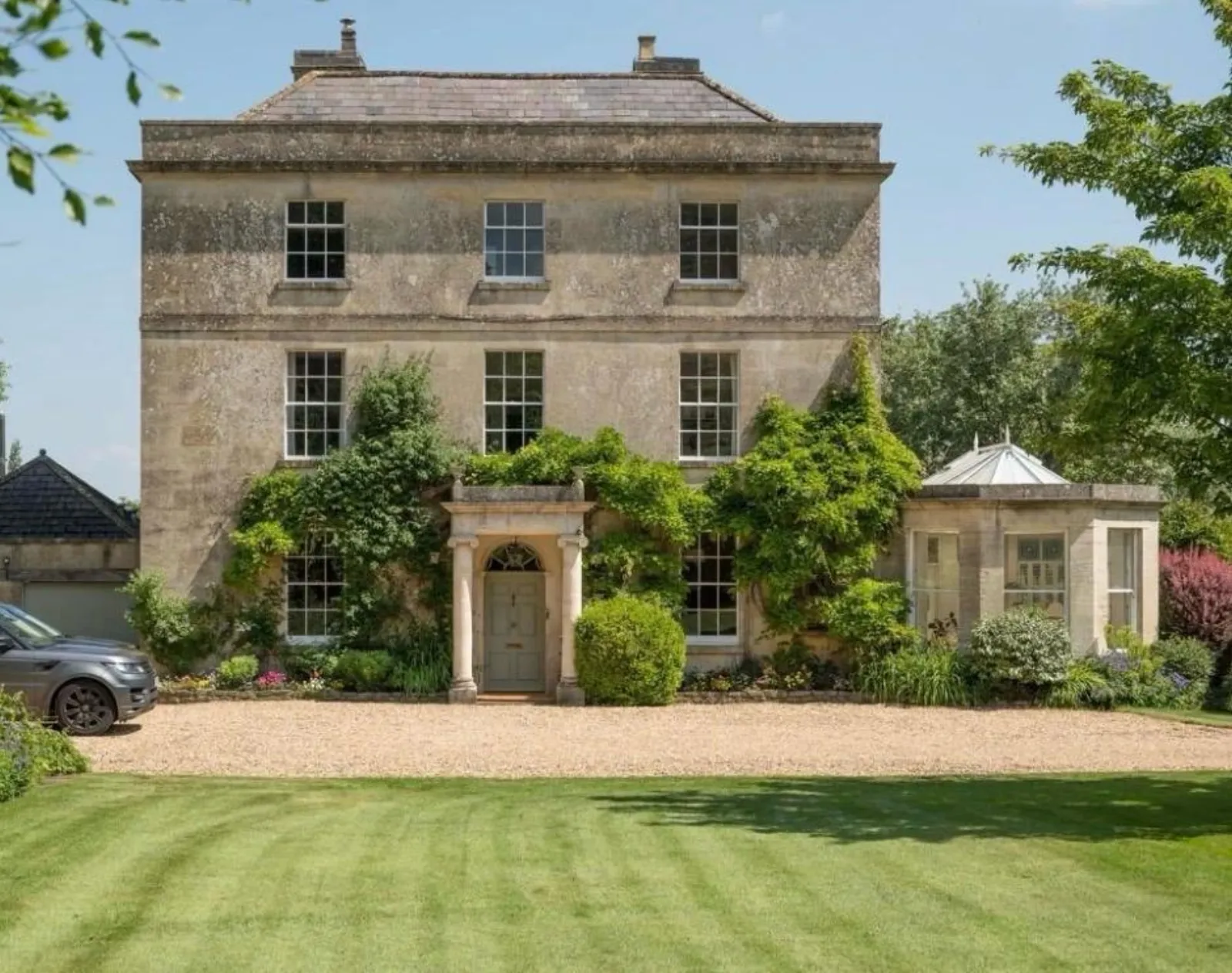
Bath stone is one of England’s most beautiful building materials. It’s also one of its most demanding. The oolitic limestone quarried from the hills around Bath is relatively soft and porous — properties that make it easy to carve and pleasant to look at, but that also make it vulnerable to water ingress when the mortar joints that hold it together fail.
Repointing is the process of removing deteriorated mortar from the joints between stone and replacing it with fresh material. Done correctly, it protects the masonry from water penetration for decades. Done incorrectly — particularly with the wrong mortar — it can cause irreversible damage to the stone itself.
Signs Your Bath Stone Property Needs Repointing
Crumbling or missing mortar. The most obvious sign. Run your finger along the joints: if mortar crumbles away or is recessed more than 10mm from the face of the stone, repointing is overdue.
Damp on internal walls. Water tracking through failed joints often appears as damp patches on internal plasterwork, particularly on exposed elevations. If damp seems to appear after rain rather than rising from the floor, failed pointing is a common cause.
Efflorescence. White salt deposits on the face of the stone indicate water is moving through the masonry and evaporating at the surface, depositing dissolved salts as it does. It signals active water ingress.
Frost damage on the stone face. If water penetrates into porous stone and then freezes, the expansion can spall the face of the stone — a process called spalling or freeze-thaw damage. Once stonework starts to spall, repointing alone won’t fix it; individual stones may need cutting out and replacing.
Black biological growth in the joints. Algae and moss growth in the mortar joints indicates persistent moisture retention. Beyond aesthetics, biological growth accelerates mortar deterioration.
The Lime vs Cement Question
This is the most important technical decision in repointing Bath stone — and the one most likely to be got wrong by builders unfamiliar with traditional construction.
Bath stone was laid and pointed using lime mortar — a mix of lime putty or hydraulite lime and sand, with a much lower compressive strength than the stone itself. This is deliberate. The mortar is designed to be the sacrificial element: it allows the wall to move slightly with thermal expansion and moisture changes, and it allows any water that does get in to escape by evaporation.
Repointing Bath stone with ordinary Portland cement mortar is deeply damaging. Cement mortar is harder and less permeable than the stone. It traps moisture behind the joint, concentrates stress at the stone face, and causes the stone itself to spall and decay. The damage is often invisible for several years before it becomes apparent — by which point it’s expensive to reverse.
On any listed building or in any Bath conservation area, Portland cement repointing will also be a condition of listed building consent — you simply can’t do it. But even on unlisted properties, lime mortar is the correct technical choice for Bath stone.
The mortar specification matters too. Hydraulic lime (NHL 2 or NHL 3.5 for Bath stone) offers better performance than a straight lime putty mix in exposed conditions. An experienced mason will know the right specification for your elevation and exposure.
What the Work Involves
Repointing is skilled, labour-intensive work. The process:
-
Rake out the deteriorated mortar to a minimum depth of 25mm — enough to get a proper key for the new mortar. This is done with hand tools (chisels and raking chisels) or very carefully with angle grinders. Aggressive mechanical raking risks damaging the stone arrises (edges).
-
Brush down and wet the joints before applying new mortar. Dry stone and old mortar will draw moisture out of fresh lime too quickly, causing it to fail before it cures.
-
Apply the mortar in layers if deep raking has been required, allowing each layer to stiffen before applying the next. The final flush should be finished to match the existing joint profile — traditionally a slightly recessed flat joint or a slightly weathered profile.
-
Protect and cure. Lime mortar needs to cure slowly. In hot weather, new pointing should be protected from direct sunlight and kept slightly damp for several days. In cold weather, work should stop if temperatures drop below 5°C.
How Much Does Repointing Cost in Bath?
Costs vary significantly depending on access requirements and the extent of work. Typical day rates for experienced lime masons in the Bath area run from £250 to £350 per day. Scaffold access adds significantly to the total cost for anything above ground floor.
Rough guide:
| Scope | Typical cost range |
|---|---|
| Single elevation, ground floor (no scaffold) | £800 – £1,800 |
| Full terrace house, all elevations (with scaffold) | £4,500 – £9,000 |
| Large detached or semi-detached property | £8,000 – £18,000+ |
These ranges reflect significant variation in stone condition, joint depth, mortar specification and access complexity. A thorough assessment of your property is needed before any meaningful figure can be given.
Aspect Builds and Heritage Masonry
We carry out lime repointing and heritage masonry work across Bath and the surrounding villages. Our team understands the specific requirements of Bath stone — the right mortar specification, the correct raking depths, the proper curing regime. We work on both listed and unlisted properties, and we’re familiar with the material and condition standards required by Bath & NES Council’s planning authority.
If you’re seeing signs of mortar deterioration on your Bath stone property, don’t wait for the problem to reach the stone face.